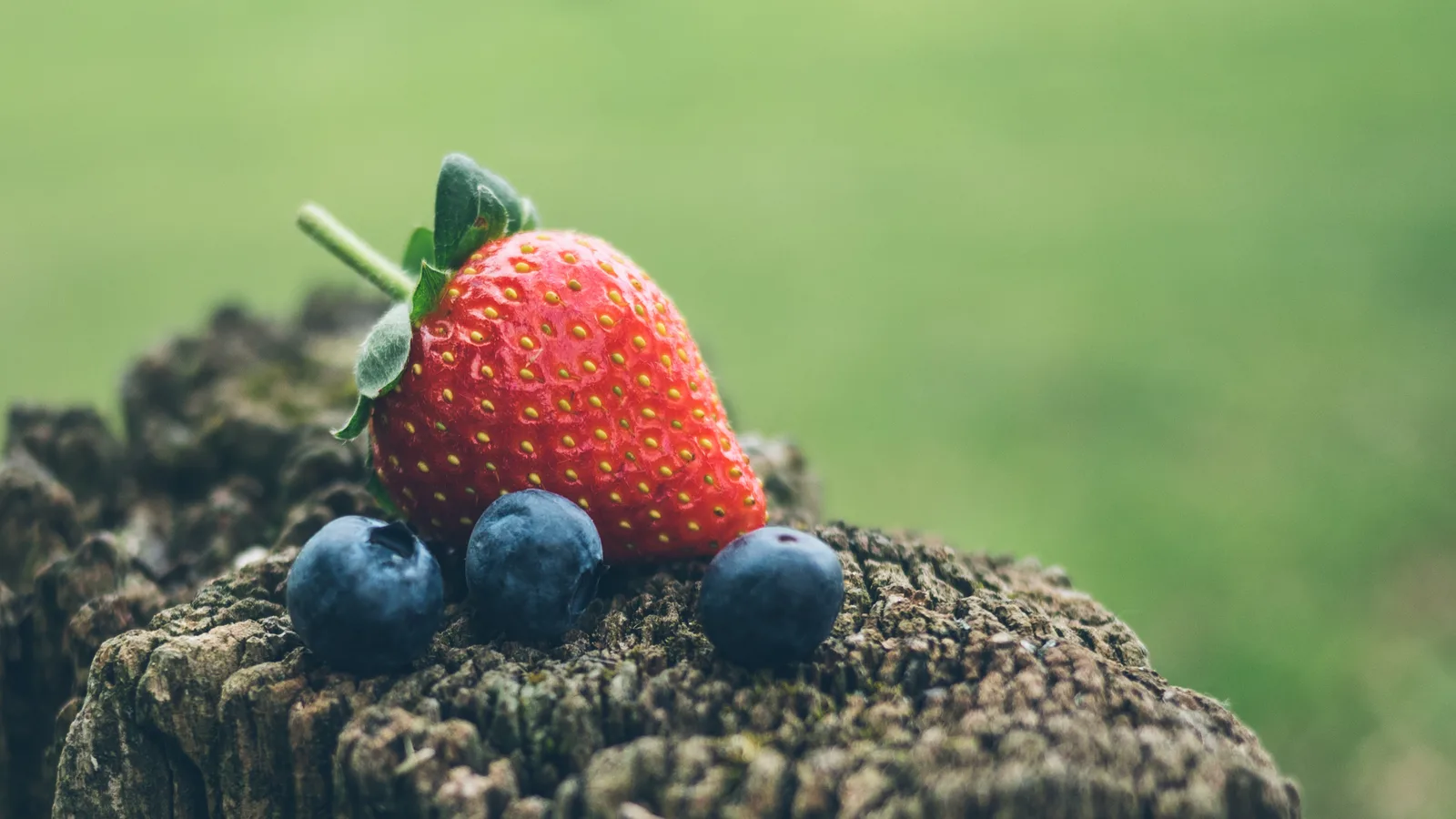
Strawberries and blueberries are two of the easiest fruits to say yes to: kids reach for them, and they need almost no prep. Blueberries get the superfood reputation and usually cost more, so most of us assume they’re the healthier pick. Put the two side by side, though, and each berry turns out to be best at something different.
Quick answer: Strawberries vs blueberries has no single winner, because the two berries are good at different things. Strawberries have far more vitamin C: three or four medium strawberries cover a young kid’s vitamin C for the day, and about a dozen cover an adult’s. Blueberries have more vitamin K, which the body uses for blood clotting and healthy bones, plus a little more fiber. Strawberries usually cost less, blueberries keep longer in the fridge, and frozen blueberries cost less than fresh ones.123456
Strawberries vs blueberries: what each berry gives your family
If you’ve always figured the blueberries were the healthier choice, you’re in good company, and the numbers make it much more even. The two berries look different, taste different and bring different nutrients. The table puts one cup of each side by side, using USDA’s measurements. The nutrient rows show the percent of the Daily Value printed on food labels.127
| Strawberries | Blueberries | |
|---|---|---|
| Taste | Sweet with a little tang | Mild and sweet |
| Texture | Soft and juicy | Firm, with a pop when you bite |
| Size | About 1 to 1⅝ inches across; one medium strawberry weighs about as much as 9 blueberries12 | Small and round |
| On the outside | Tiny yellow “seeds” all over the skin | A dusty, whitish coating called the bloom |
| Calories (1 cup) | 46 | 84 |
| Natural sugar (1 cup) | 7 g | 15 g |
| Vitamin C (1 cup) | 85 mg: 94% of the Daily Value | 14 mg: 16% of the Daily Value |
| Vitamin K (1 cup) | 3 mcg: 3% of the Daily Value | 29 mcg: 24% of the Daily Value |
| Fiber (1 cup) | 2.9 g: 10% of the Daily Value | 3.6 g: 13% of the Daily Value |
Strawberries are the vitamin C berry. A cup covers nearly a full day of vitamin C even for an adult, and for a young kid, three or four medium strawberries do it.13 The National Institutes of Health (NIH) puts strawberries on its list of vitamin C foods, next to broccoli and tomatoes. According to NIH, vitamin C goes into collagen, the protein a cut needs to heal; it helps the body take in the iron from plant foods; and it helps the immune system work properly.3 Collagen is part of how a scraped elbow heals over, and plant foods with iron include the black beans on tonight’s dinner plate.
Blueberries are the vitamin K berry. They have about a sixth of strawberries’ vitamin C, but about nine times their vitamin K, and one cup gives about half a young kid’s vitamin K for the day and a quarter to a third of an adult’s.24 NIH says the body needs vitamin K for blood to clot and for healthy bones, and it names blueberries, along with figs, among the fruits that have some.4 Clotting is what stops the bleeding when a wiggly tooth comes out, and healthy bones are what carry your kid up the climbing wall.
Blueberries also bring a little more fiber. A cup of blueberries has about 13% of the Daily Value for fiber, and a cup of strawberries about 10%.127 Blueberries have nearly twice the calories and about twice the sugar, too: 84 calories and 15 grams of sugar a cup, against 46 and 7 for strawberries. All of it is the fruit’s own sugar, with nothing added, so a cup of blueberries is still a cup of fruit.12
So both berries earn a spot. The real question at the store is which one fits your cart this week.
Which berry to buy: price, frozen and organic
The cheaper clamshell isn’t the lesser berry: in USDA’s prices, fresh strawberries cost about 70 cents less a cup than fresh blueberries. In 2023, U.S. stores averaged about $1.05 a cup for fresh strawberries and $1.73 a cup for fresh blueberries, and strawberries were the cheapest fresh berry USDA priced, below blackberries and raspberries.5 Prices move with the season and the store, so your receipt may look different, but strawberries still give your kid the most vitamin C for each dollar.
In the freezer aisle, only the blueberries get cheaper. Frozen blueberries averaged about $1.39 a cup, about 34 cents less than fresh, while frozen strawberries cost about the same as fresh ones, roughly 10 cents more.5 Frozen berries keep their fiber and most of their vitamin K. In USDA’s numbers they carry less vitamin C than fresh, but a cup of frozen strawberries still has about 61 mg, a full day’s worth for every kid up to 13.893
| Fresh strawberries | Frozen strawberries | Fresh blueberries | Frozen blueberries | |
|---|---|---|---|---|
| Price per cup (2023)5 | About $1.05 | About $1.15 | About $1.73 | About $1.39 |
| Pros | The cheapest form, with the most vitamin C: 85 mg a cup.1 | Waits in the freezer and goes straight into a smoothie. Still about 61 mg of vitamin C a cup.8 | Keeps up to a week in the fridge, with no cutting for the lunchbox.6 | About 34 cents a cup less than fresh, with the vitamin K (about 25 mcg a cup) and fiber still there.59 |
| Cons | Keeps only about 3 days in the fridge.6 | Soft once thawed, so better blended or stirred in than eaten whole. A little pricier than fresh. | The priciest form. | Very little vitamin C left, about 4 mg a cup.9 |
Both berries are also on EWG’s 2026 Dirty Dozen, the environmental group’s list of the produce with the most pesticide residue in government testing: strawberries at #3 and blueberries at #12, the last spot.10 EWG suggests choosing organic versions of Dirty Dozen foods when you can and frozen produce as an affordable option, and it says the point of the guide is to get people eating more fruits and vegetables, whether they buy organic or conventional.11 Our Dirty Dozen guide explains what the ranking does and doesn’t mean for your cart.
Put together: fresh strawberries give you the most vitamin C for the money, fresh blueberries last the longest in the fridge, and frozen blueberries are the budget way to buy the blue ones. For a kid who likes having a mission at the store, the free TJ’s Grocery Challenge, with its Taste Test Tracker, gives them one: a list of things to find in the produce aisle, plus a chart for rating the berries they try at home.
Once the berries are home, when you wash them decides whether they last until Friday.
How to wash, store and serve them
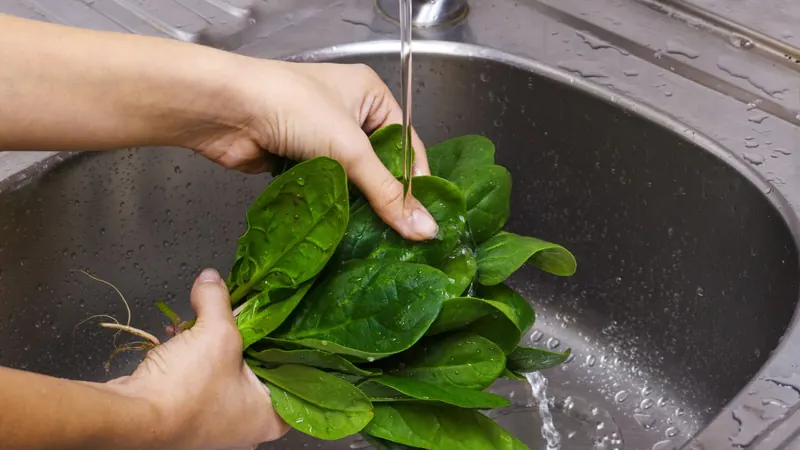
Berries last longer when they go into the fridge dry, so the washing can wait until snack time. University of Illinois Extension says not to wash berries until you’re ready to use them, and Iowa State University Extension says to rinse them in a colander under cool running water right before eating.126 Our guide on how to wash strawberries to remove pesticides walks through the full method, including what a baking soda soak can and can’t do.
In the fridge, the two berries keep for very different lengths of time. Iowa State says strawberries last up to 3 days and blueberries up to a week, each in a container that lets some air in, and Illinois adds that strawberries shouldn’t sit out at room temperature for more than a few hours.126 So when you buy both, eat the strawberries first and save the blueberries for later in the week.
Both berries go almost anywhere a kid eats:
- Breakfast: sliced strawberries on cereal or yogurt, or a handful of frozen blueberries stirred into hot oatmeal, where they thaw as it cools.
- Baking: blueberries go into pancakes and muffins whole and hold their shape.
- Smoothies: frozen berries go straight into the blender, no thawing needed.
- Lunchbox: blueberries need no cutting, and strawberries travel best whole, with the caps still on, until lunch.
However you serve them, the berries get more interesting once your kid takes a closer look.
How to get kids curious about both
Here’s one to try at the table: rub a blueberry between your fingers, and the blue starts to come off. That dusty coating is the bloom, a layer of natural wax. In 2024, University of Bristol scientists showed that the bloom is what makes blueberries look blue: tiny structures in the wax scatter blue light, while the pigment in the skin underneath is dark red.13 That’s why squishing a blueberry never gives you blue juice. Kansas State University notes the wax is a harmless, natural part of the fruit that helps it resist mold.14
Strawberries have their own surprise on the outside. Each little yellow “seed” is actually a tiny fruit with a real seed inside, says Oregon State University botanist Aaron Liston. A medium strawberry has about 200 of these tiny fruits.15 The red part we eat is the swollen base of the flower, and botanists don’t count a strawberry as a true berry.15
Put a bowl of strawberries next to a bowl of blueberries and you’ll see why we stopped picking one. When we served both to students, they took them about equally and loved them every way: fresh, in smoothies, with yogurt or topped with whipped cream. At home, a few small jobs make the bowls even more fun:
- Rub and compare. Have your kid rub the bloom off one blueberry and hold it next to one that still has its coat.
- Guess the seeds. Hand them a strawberry and ask for a guess before they count one side. A medium berry has about 200.15
- Sort and weigh. Tip a handful of each into one bowl and let your kid sort them back out. Then ask how many blueberries weigh the same as one strawberry. For a medium strawberry, the answer is about 9.12
- Run a four-way taste test. Serve both berries fresh, frozen, in yogurt and in a smoothie, and let your kid rank all eight.
- Take a kitchen job. Our Strawberry Gazette’s parent guide gives kids ages 6 to 8 three jobs: wash the berries, pat them dry, then twist off the stems.
Along the way, ask what they notice: “Why would a strawberry wear its seeds on the outside?” “What color is a blueberry under its coat?” For more questions like these, try our conversation starters, free to download.
Berry songs and a strawberry story
Before the bowls come out, let your kid pick the soundtrack. These two NutraBeats songs are made for berry time.
Sweet Berry Friends
Red Delights
For the strawberry’s side of the story, watch our NutraPlanet News episode The Mind-Blowing Truth About Strawberries Science Class Never Taught You together.
A bowl of each tends to bring a few more questions with it.
Strawberry and blueberry questions
Are blueberries a superfood?
Not in any official sense. Harvard’s Nutrition Source points out that there’s no scientific or regulated definition of a superfood, and that the label does more for sales than for nutrition advice.16 Blueberries are a good fruit without the title, and so are strawberries, which beat them on vitamin C. Harvard suggests building meals from lots of different foods, which it calls a “super plate,” and a bowl of both berries fits right in.16
Which has more sugar, strawberries or blueberries?
Blueberries: about 15 grams in a cup, compared with about 7 grams in a cup of strawberries. Both amounts are the fruit’s own natural sugar, and fresh berries and unsweetened frozen ones have nothing added.12 To see how strawberries’ sugar compares with a dozen other fruits, check the table in our post on the health benefits of strawberries.
Which berry has more fiber?
Blueberries, by a little: about 3.6 grams a cup, compared with 2.9 grams in a cup of strawberries. Either one is a start on a kid’s fiber for the day, with beans, vegetables and whole grains bringing the rest.12
Can toddlers eat strawberries and blueberries?
Yes, cut into small pieces. CDC lists uncut berries among the foods that can make young children choke, and it says cutting food into smaller pieces and mashing it can help prevent choking.17 Your pediatrician can tell you what size and texture fit your child’s age.
Back in the produce aisle
So the next time you’re holding a clamshell in each hand, you can skip the guessing: both berries earn their spot. Strawberries bring the vitamin C for less money, blueberries bring vitamin K and last longer in the fridge, and frozen blueberries keep the blue ones in the budget. Wash them right before snack time, set out a bowl of each, and let your kid run the berry sort while “Sweet Berry Friends” plays. When they want the story behind the red one, our NutraPlanet News episode and the Strawberry issue of the NutraPlanet Gazette pick it up, with a Myth Busters page and kitchen jobs for young helpers. Read a free issue, and if it’s a hit, a Gazette library membership opens all 11 finished issues.
Every child is different, so if you have questions about what you or your kids should eat, your pediatrician or a registered dietitian is the best person to ask.
Footnotes
-
USDA FoodData Central: Strawberries, raw ↩ ↩2 ↩3 ↩4 ↩5 ↩6 ↩7 ↩8 ↩9 ↩10
-
USDA FoodData Central: Blueberries, raw ↩ ↩2 ↩3 ↩4 ↩5 ↩6 ↩7 ↩8 ↩9
-
USDA Economic Research Service: Fruit and Vegetable Prices ↩ ↩2 ↩3 ↩4 ↩5
-
Iowa State University Extension: Spend Smart Eat Smart, Berries ↩ ↩2 ↩3 ↩4 ↩5
-
FDA: Daily Value on the Nutrition and Supplement Facts Labels ↩ ↩2
-
USDA FoodData Central: Strawberries, frozen, unsweetened ↩ ↩2
-
USDA FoodData Central: Blueberries, frozen, unsweetened ↩ ↩2 ↩3
-
University of Illinois Extension: Strawberries, Handling and Care ↩ ↩2
-
University of Bristol: Scientists reveal why blueberries are blue ↩
-
Kansas State University: White Spots on Home Canned Blueberries ↩
-
Live Science: Why do strawberries have seeds on the outside? ↩ ↩2 ↩3