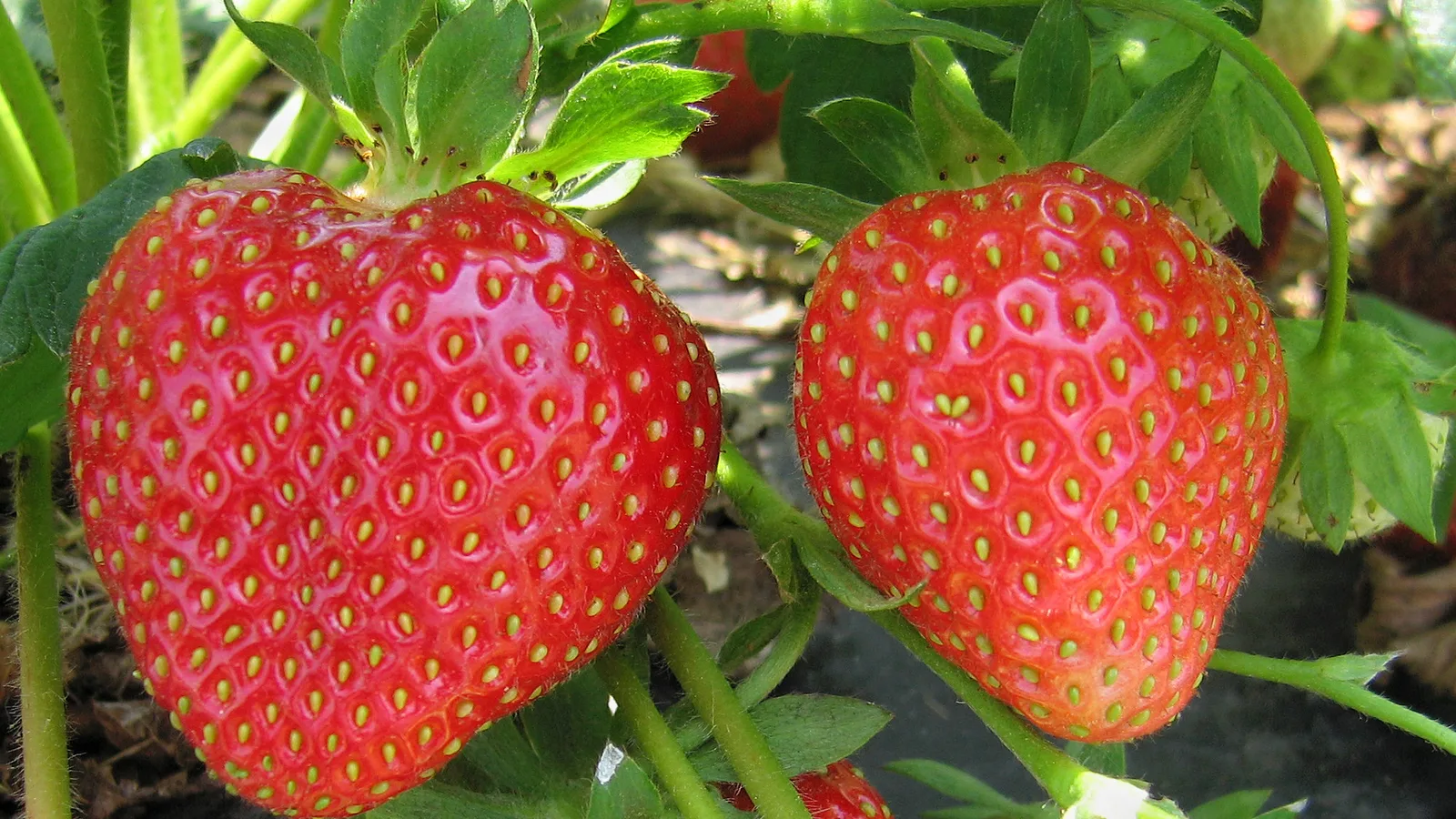
Strawberries taste so much like a treat that it’s fair to wonder whether they count as healthy at all. They star in cakes, ice cream and jam, and they’re always the first fruit gone from the snack plate. So are they a sweet treat, or one of the best fruits you can put on your family’s table?
Quick answer: The health benefits of strawberries come in a sweet package with surprisingly little sugar. Cup for cup, strawberries have about 7 grams of sugar (less than bananas, apples, grapes or blueberries) and more vitamin C than a medium orange. A handful also brings folate, manganese and fiber. Fresh or unsweetened frozen berries are an easy everyday fruit; added sugar, in jam or sweetened frozen packs, is what changes the picture.12345
Are strawberries too sweet for your family?
If strawberries disappear like candy at your house, you may have wondered about the sugar: cup for cup, there’s less of it than in bananas, apples, grapes or even blueberries. A cup of whole strawberries has about 7 grams of natural sugar and 46 calories, and about nine-tenths of the berry’s weight is water.1 Lined up against a dozen fruits families buy all the time, strawberries come out with the least sugar per cup:2
| Fruit (raw, 1 cup) | Natural sugar |
|---|---|
| Strawberries | 7 g |
| Watermelon | 9 g |
| Peaches | 13 g |
| Apples | 13 g |
| Blueberries | 15 g |
| Kiwi | 16 g |
| Pineapple | 16 g |
| Oranges | 17 g |
| Bananas | 18 g |
| Cherries | 20 g |
| Mango | 23 g |
| Grapes | 23 g |
Every gram in that table comes from the fruit itself; none of it is added. Every fruit on the list is worth eating, too; the table only shows that the one tasting most like dessert is carrying the least sugar of the bunch.
So strawberries aren’t too sweet for anyone at the table. Here’s what they bring along with that sweetness.
Health benefits of strawberries: what a serving does for your family
Most of us think of oranges for vitamin C, yet a cup of strawberries has more than a medium orange: about 85 milligrams, compared with about 70 in an orange that size.12 Vitamin C is the biggest thing strawberries bring, and folate, manganese and fiber come along with it. Here’s what two everyday amounts give, with each nutrient’s percent of the Daily Value, the number on nutrition labels:16
| A handful (5 medium berries) | One cup (about 12 medium) | |
|---|---|---|
| Vitamin C | 35 mg (39%) | 85 mg (94%) |
| Manganese | 0.23 mg (10%) | 0.56 mg (24%) |
| Fiber | 1.2 g (4%) | 2.9 g (10%) |
| Folate | 14 mcg (4%) | 35 mcg (9%) |
| Sugar and calories | 3 g, 19 calories | 7 g, 46 calories |
How many strawberries does it take to cover a day’s vitamin C? That depends on who’s eating. Using the amounts the National Institutes of Health (NIH) recommends for each age, here’s the count in medium strawberries:13
| Who’s eating | Strawberries for a day’s vitamin C |
|---|---|
| Toddlers (1 to 3) | about 2 |
| Kids 4 to 8 | about 3 or 4 |
| Kids 9 to 13 | about 6 or 7 |
| Teens | about 9 to 11 |
| Adults | about 11 to 13 |
Vitamin C does three jobs NIH calls out: it helps the body make collagen, a protein the body needs to heal a cut; it lets the body absorb more of the iron in plant foods; and it helps keep the immune system working properly.3 That’s why strawberries sliced over a bowl of iron-fortified cereal make such a good pair: the iron and the vitamin C arrive in the same spoonful.7
The rest of the list works more quietly. Folate is a B vitamin the body relies on to build DNA and to let cells divide.4 Manganese is a mineral the body uses to make energy and protect cells, and it needs manganese for strong bones and a healthy immune system; a cup of strawberries gives about a quarter of the Daily Value.51 The fiber is a smaller start, and the other fruits, vegetables, beans and grains on the plate supply the rest.
All of that holds for any ripe strawberry. How sweet the next one tastes comes down to two things: the variety and when it was picked.
Why some strawberries taste sweeter than others
Most of us grab a clamshell labeled “strawberries” without a second thought, but there are different kinds of strawberry plants, and the berries they grow don’t all taste the same. Some plants give one big crop in early summer, some fruit twice a year, and some keep going all season long.8 Within those groups are many named varieties, each with its own personality.
Take the Hood, an Oregon favorite since 1965. It’s dark red, very sweet and juicy, and so soft it has to be eaten or turned into jam soon after picking, which is exactly what it was bred for.910 Different regions grow different varieties, bred for their own weather and seasons, so a strawberry from your local farm may not be the same berry you’d find a few states away. Ask around your table and you’ll hear different ideas of the perfect strawberry: extra sweet, a little tart, big enough to dip. Breeders in each region chase the same thing, testing new varieties to see which ones people like best.11 In Florida, a newer variety called Sweet Sensation tasted sweeter than two of its cousins in tests and lasted longer on the shelf.12
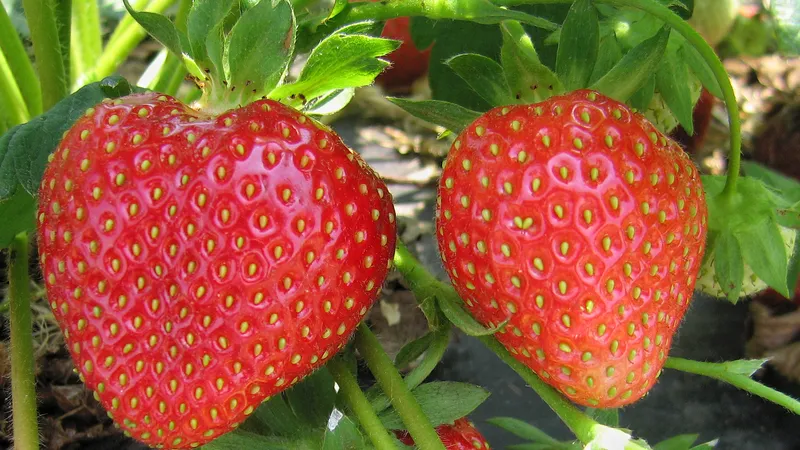
Photo: USDA Agricultural Research Service. Flavorfest, one of the strawberry varieties USDA has developed.
Whatever the variety, ripeness decides the rest. Strawberries don’t keep ripening after they’re picked, so a berry picked early never catches up on sweetness.1314 That makes the store the place to choose:14
- Ripe: red all the way up to the green cap. The exact shade depends on the variety, lighter or darker.
- Underripe: pale or white near the cap, a sign it was picked before it colored all the way.
- Overripe: soft and leaky, and quick to grow gray mold.
If someone in your family likes having a job at the store, hand them the cap check, and the free TJ’s Grocery Challenge adds a whole list of produce-aisle finds plus a chart for rating them at home.
Once you’ve picked a good box, one more thing changes how sweet a strawberry tastes, and it’s already in your kitchen.
A sweetness taste test (and a strawberry song)
Want to see how much a little warmth changes a strawberry? Put three in the fridge and leave three on the counter for half an hour. Then have everyone taste one of each and vote on which is sweeter. It’s the flavor experiment from our Strawberry Gazette, and there’s real science behind it. In a 2005 lab study with mice, warming the tongue from about 59°F to 95°F made the taste nerves respond much more strongly to sweet things. The researchers say this may be why people taste more sweetness in warmer food.15
A few more ways to keep the whole family curious about strawberries:
- Check the caps. Before snack time, someone counts how many berries in the bowl are red right up to the green cap.
- Taste a white-tipped berry. If one sneaks into the box, compare it with a fully red one and describe the difference.
- Build a strawberry bowl. Anyone old enough for a table knife can slice berries onto plain yogurt or oatmeal and add their own toppings.
- Blend a breakfast smoothie. Teens can blend unsweetened frozen strawberries with yogurt or milk on a school morning.
- Hand over the prep. Our Strawberry Gazette’s parent guide suggests rinsing, patting dry and twisting off the caps as jobs for kids ages 6 to 8.
While you eat, ask what everyone notices: “Which one tasted sweeter in your test?” “Why do you think the temperature made a difference?” Our free conversation starters have plenty more food questions for the table.
Play the strawberry song
Put this one on while the berries warm up on the counter.
Red Delights
Then queue up our NutraPlanet News strawberry episode, which digs into the strawberry’s backstory.
Then come the questions families ask most about strawberries: how many, the Dirty Dozen and allergies.
Strawberry questions
How many strawberries can you eat in a day?
There’s no set number. NIH gives nutrient amounts by age rather than fruit counts, and the table above shows how many strawberries cover a day’s vitamin C, from about 2 for a toddler to about 11 to 13 for an adult.31 The Dietary Guidelines suggest choosing a variety of foods from each food group, so strawberries work best as one favorite among several fruits.16
Are strawberries on the Dirty Dozen?
Yes. Strawberries are #3 on EWG’s 2026 Dirty Dozen, EWG’s ranking of the produce that carried the most pesticide residue when the government tested it.17 EWG suggests organic versions of those foods when you can, names frozen produce as an affordable option, and says the guide is there to encourage people to eat plenty of fruits and vegetables, whether organic or conventional.18 Our washing guide covers how to wash strawberries to remove pesticides step by step.
Can you be allergic to strawberries?
Yes, though strawberries aren’t one of the nine major food allergens named in U.S. law: milk, eggs, fish, crustacean shellfish, tree nuts, peanuts, wheat, soybeans and sesame. The FDA notes that more than 160 foods can cause food allergies.19 If anyone in your family gets a rash, hives or swelling after eating strawberries, check with your doctor or your child’s pediatrician.
Are strawberries good for your heart?
The research so far is about adults and shows a link, not proof. A U.S. study that followed 93,600 women ages 25 to 42 for 18 years found that those who ate the most anthocyanins (an-thoh-SIGH-uh-nins), the pigments in red and blue foods, had fewer heart attacks. Women who ate more than three servings a week of strawberries and blueberries combined tended to have lower risk too, but that result wasn’t strong enough to be certain, and the authors called for trials to test it.20
Are frozen strawberries as healthy as fresh?
Unsweetened frozen strawberries have about the same sugar as fresh and still plenty of vitamin C, about 61 milligrams a cup. Check that the bag says “unsweetened”: frozen strawberries packed in sugar have about 61 grams of sugar a cup once thawed, compared with about 7 in a cup of fresh.21 Our strawberries vs blueberries guide compares fresh and frozen berries, prices included.
Can toddlers eat strawberries?
Yes, cut into small pieces. CDC lists uncut berries among the foods that can make young children choke and says cutting food smaller and mashing it can help prevent choking.21
Back to the snack bowl
So the next time the strawberries vanish first, you can enjoy watching it happen. They taste like a treat and carry less sugar than most fruits in the bowl, along with a big share of the day’s vitamin C and some folate, manganese and fiber. Pick berries that are red right up to the cap, let a few warm up on the counter before snack time, and put on “Red Delights” while the family runs the warm-vs-cold taste test. When the kids want the story behind the berry, our NutraPlanet News episode and the NutraPlanet Gazette’s Strawberry issue pick up from there, with Hood strawberries, a flavor experiment and kid-sized kitchen jobs. Read a free issue, and if it’s a hit, a Gazette library membership opens all 11 finished issues.
Every family is different, so if you have questions about what you or your kids should eat, your pediatrician or a registered dietitian is the best person to ask.
Footnotes
-
USDA FoodData Central: Strawberries, raw ↩ ↩2 ↩3 ↩4 ↩5 ↩6 ↩7 ↩8
-
USDA FoodData Central: SR Legacy foods (fruit comparison) ↩ ↩2 ↩3 ↩4
-
FDA: Daily Value on the Nutrition and Supplement Facts Labels ↩
-
Oregon State University Extension: Growing Strawberries in Your Home Garden ↩
-
Fruit Varieties Journal: Hood, New Strawberry for the Northwest (1965) ↩
-
OPB: How science and history created the delicious Oregon strawberry ↩
-
UF/IFAS News: Sweet Sensation strawberry lives up to its name ↩
-
University of Georgia Extension: Strawberry Maturity Indices and Quality ↩
-
NC State Extension: Postharvest Produce Guide, Strawberries ↩ ↩2
-
Talavera et al. 2005: Heat activation of TRPM5 underlies thermal sensitivity of sweet taste ↩
-
Dietary Guidelines for Americans, 2025-2030: Daily Servings ↩
-
Cassidy et al. 2013: Anthocyanin intake and heart attack risk in young and middle-aged women ↩