Broccoli is on the plate again, and everyone says it’s good for kids. Good for what, though? And does it still count if your kid eats three florets and leaves the rest? The answer is better news than you’d expect. Broccoli does real, everyday work in a growing body, and the amount it takes is small enough to change how you think about that half-eaten plate.
Quick answer: Broccoli benefits for kids are real, and getting them doesn’t take much. Broccoli is rich in vitamin C, which helps wounds heal, and vitamin K, which helps blood clot and is important for healthy bones.12 It adds folate, fiber, vitamin A and potassium. Half a cup cooked covers a full day’s vitamin C and K for every kid up to 13, and a full cup does it for adults.312
The 6 broccoli benefits for kids
“Good for you” is hard to picture when you’re scraping plates after dinner. So for each of broccoli’s six main nutrients, here’s what it does in the body, where you’d notice that in a normal week, and how much broccoli gives. The amounts are for one cup of cooked broccoli, about the size of a baseball, or by weight roughly 14 florets, from USDA FoodData Central.345 The percentages are of the Daily Value, the same yardstick printed on every Nutrition Facts label.6
1. Vitamin C
Every scraped knee from the playground heals with help from vitamin C, and a cup of cooked broccoli has about 101 mg of it, or 112% of the Daily Value.36 The body uses vitamin C to make collagen, a protein that helps wounds heal. It also helps the immune system work properly, and it helps the body absorb the iron in plant foods, according to the National Institutes of Health (NIH).1 Since vitamin C helps with that iron, broccoli makes a good partner for iron-rich plant foods like white beans, lentils and kidney beans: toss it into pasta with white beans, or serve it next to a bowl of lentil soup.7
2. Vitamin K
When a cut or a nosebleed stops bleeding, vitamin K is part of the reason, and a cup of broccoli has about 220 mcg, or 183% of the Daily Value.36 Vitamin K is important for blood clotting and healthy bones, and NIH names broccoli as a source.2 Healthy bones are the ones carrying your kid up the monkey bars and down the soccer field.
3. Folate
When last season’s shoes stop fitting, folate has been at work: the body uses it to make the new cells that growing takes. A cup has about 168 mcg, or 42% of the Daily Value.36 Folate is a B vitamin the body needs to make DNA and for cells to divide.8
4. Fiber
Fiber does its job quietly, keeping digestion moving from one day to the next, and a cup has about 5 grams, or 18% of the Daily Value.36 Fiber is important for digestion. One kind, insoluble fiber, adds bulk and appears to help food pass through the stomach and intestines, according to the National Library of Medicine.9 Where you’ll notice it, honestly, is the bathroom.
5. Vitamin A
The eyes reading tonight’s bedtime story rely on vitamin A, and a cup of broccoli has about 120 mcg, or 13% of the Daily Value.36 Broccoli’s vitamin A comes from beta-carotene (BAY-tuh KAIR-uh-teen), a plant pigment the body can turn into vitamin A. Vitamin A helps with normal vision, the immune system, and growth and development.10 It’s also part of the growth spurts you mark in pencil on the door frame. Broccoli gives some, though it isn’t the top source.
6. Potassium
Every kick of a ball depends on muscles and nerves, and potassium is part of both. A cup has about 457 mg, or 10% of the Daily Value.36 The body needs potassium for almost everything it does, including the heart, kidneys, muscles and nerves, and NIH lists broccoli as a source.11 Every climb up the stairs depends on muscles contracting and nerves sending signals.
One more thing worth knowing: broccoli isn’t a big calcium food. A cup has about 62 mg, around 5% of the Daily Value, so its link to bones comes from vitamin K.36 It also has almost 4 grams of protein per cup, a nice bonus for a vegetable.3
Does a little broccoli count? How much your kid really needs
If your kid eats three florets and pushes the rest aside, did any of that count? It did, and by more than most of us would guess. Kids need much less broccoli than adults to cover a full day of its two biggest vitamins.
Here’s how many florets of cooked broccoli cover a full day of vitamin C for each person at the table (a cooked cup is roughly 14 florets by weight), using NIH’s recommended amounts:351
| Who’s eating | Florets for a day’s vitamin C |
|---|---|
| Toddlers (1 to 3) | about 2 |
| Kids 4 to 8 | about 3 or 4 |
| Kids 9 to 13 | about 6 |
| Teens | about 9 or 10 |
| Adults | about 10 to 12 |
The same count covers the day’s vitamin K too, since a floret carries more than twice as much vitamin K as vitamin C.32
What that means for your family:
- A few bites count. For a young kid, three or four florets cover the day’s vitamin C.351 So the nights your kid eats a few bites and calls it done still count.
- Half a cup handles the big two. That half-baseball mound covers a full day of vitamin C and vitamin K for every age up to 13, and a full cup does the same for adults. You can skip pushing for a clean plate; that small pile already covered the day’s vitamin C and K.
- Folate and fiber add up across the day. Broccoli gives a solid start, and the rest comes from other vegetables, fruits, beans and whole grains. Broccoli doesn’t have to carry the whole day by itself.
The Dietary Guidelines count one cup of raw or cooked vegetables as a serving, and they note that smaller portions may be right for young children.12 So a small pile of broccoli on a kid’s plate is a real amount of nutrition, not a token.
Fresh, frozen, raw or cooked: which broccoli is best?
You’ve probably heard that raw is the only healthy way, or that frozen doesn’t count. Neither holds up. The Dietary Guidelines count vegetables fresh, frozen or canned, cooked or raw.12 This matters on a busy weeknight, because the form you buy decides whether broccoli makes it to the plate at all. Each form has real pros and cons, so here’s how they compare.
Fresh vs frozen
| Fresh | Frozen | |
|---|---|---|
| Pros | Crunchy enough to eat raw with dip. In USDA data, a cooked cup of fresh has the most vitamin C (about 101 mg).3 | Already cut, and it keeps in the freezer, so it’s there on the night you need it. A UC Davis study of eight fruits and vegetables, broccoli included, found frozen produce kept vitamins comparable to, and sometimes higher than, fresh produce stored in the fridge.13 |
| Cons | Keeps about 3 to 5 days in the fridge, so it needs a plan.14 | A cooked cup has a little less vitamin C than fresh in USDA data (about 74 mg), still a full day’s vitamin C for every kid up to 13. Softer once thawed, so it’s better cooked than eaten raw with dip.151 |
Putting it together: buy whichever one you’ll really cook. Even the frozen cup covers a toddler’s whole day of vitamin C several times over, so the bag in the freezer is never a step down. Frozen broccoli on Tuesday beats fresh broccoli going limp in the drawer on Friday.
Raw vs steamed vs boiled vs roasted
| Raw | Steamed | Boiled | Roasted | |
|---|---|---|---|---|
| Pros | The most vitamin C by weight, and a fun crunch with dip164 | In a lab test of five cooking methods, steaming caused no significant loss of vitamin C17 | Quick and soft, good for little ones | Browned edges and a sweeter, nuttier taste than steamed |
| Cons | Pieces of hard raw vegetables are a choking risk for young children18 | Turns soft and dull green if it cooks too long | Lost about a third of its vitamin C in the same test, likely some of it into the water17 | Not tested in that study, so we don’t know how much vitamin C it keeps |
That lab test, from Zhejiang University in China, cooked broccoli for five minutes each way.17 One more thing to know: a cup of cooked broccoli holds more broccoli than a cup of raw, because cooking shrinks it (about 156 grams cooked vs 91 grams raw).316 So per cup, cooked broccoli often comes out ahead.
Both ways of cooking that kids loved in our cafeterias, steamed and roasted, are good choices. Steam when you want to keep the most vitamin C; roast when you want the flavor to do the convincing. Since half a cup already covers a day of vitamin C for most kids, the cooking method that gets eaten is the one that wins.
How to make broccoli something kids ask for
The nutrition is the easy part: a few florets do the work. The fun part is getting your kid curious about the “little trees” before the first bite. Here are some ways to do it, including two that come from school cafeterias: a name and a story.
Give it a name
In the school cafeterias I ran in Northampton County and Aurora, broccoli was on our menus all the time, steamed or roasted, and kids loved it. For young kids we gave it a fun name. For older students we named it for how it tasted and how it was cooked, in words that made it sound delicious.
Here are some made-up examples to show the idea:
- For little kids: dinosaur trees, superhero shrubs, tiny forest
- For older kids: crispy garlic broccoli, roasted lemon-pepper trees, cheesy broccoli bites
Research backs up the grown-up version. In a Stanford University cafeteria study of college students and staff, vegetables with tasty, indulgent names (like “twisted citrus-glazed carrots”) were picked by 25% more diners than the same vegetables with plain names, and 35% more than with healthy-sounding names. The vegetables were cooked and served exactly the same way.19
Tell the president story
Broccoli comes with a memorable story from American history, and it’s a fun one to tell older kids. In March 1990, reporters asked President George H.W. Bush about a broccoli ban he’d put in place on Air Force One. His answer made national news: “I do not like broccoli. And I haven’t liked it since I was a little kid and my mother made me eat it. And I’m President of the United States, and I’m not going to eat any more broccoli!”20
California’s broccoli growers answered with about 10 tons of broccoli, sent to Washington in two truckloads. Barbara Bush accepted a broccoli bouquet at the White House, and most of the shipment went to a local food bank. Her take on her husband: “If his own blessed mother can’t make him eat broccoli, I give up.”21
Our Broccoli Gazette tells this story. In the middle and high school cafeterias of the NutraPlanet partner districts that used it, the story of the president who wouldn’t eat broccoli got students curious enough to look it up on the spot. Ask your kid at dinner: should a president get to skip his vegetables? For more questions like that one, our free conversation starters are kid-friendly dinner questions about food.
Hand them a job
Touching, smelling and helping give kids a way to explore a food before tasting it. Try these before anyone asks for a bite:
-
Snap the trees. Let your kid pull the florets off the stalk. Little hands are good at it, and it’s their broccoli now.
-
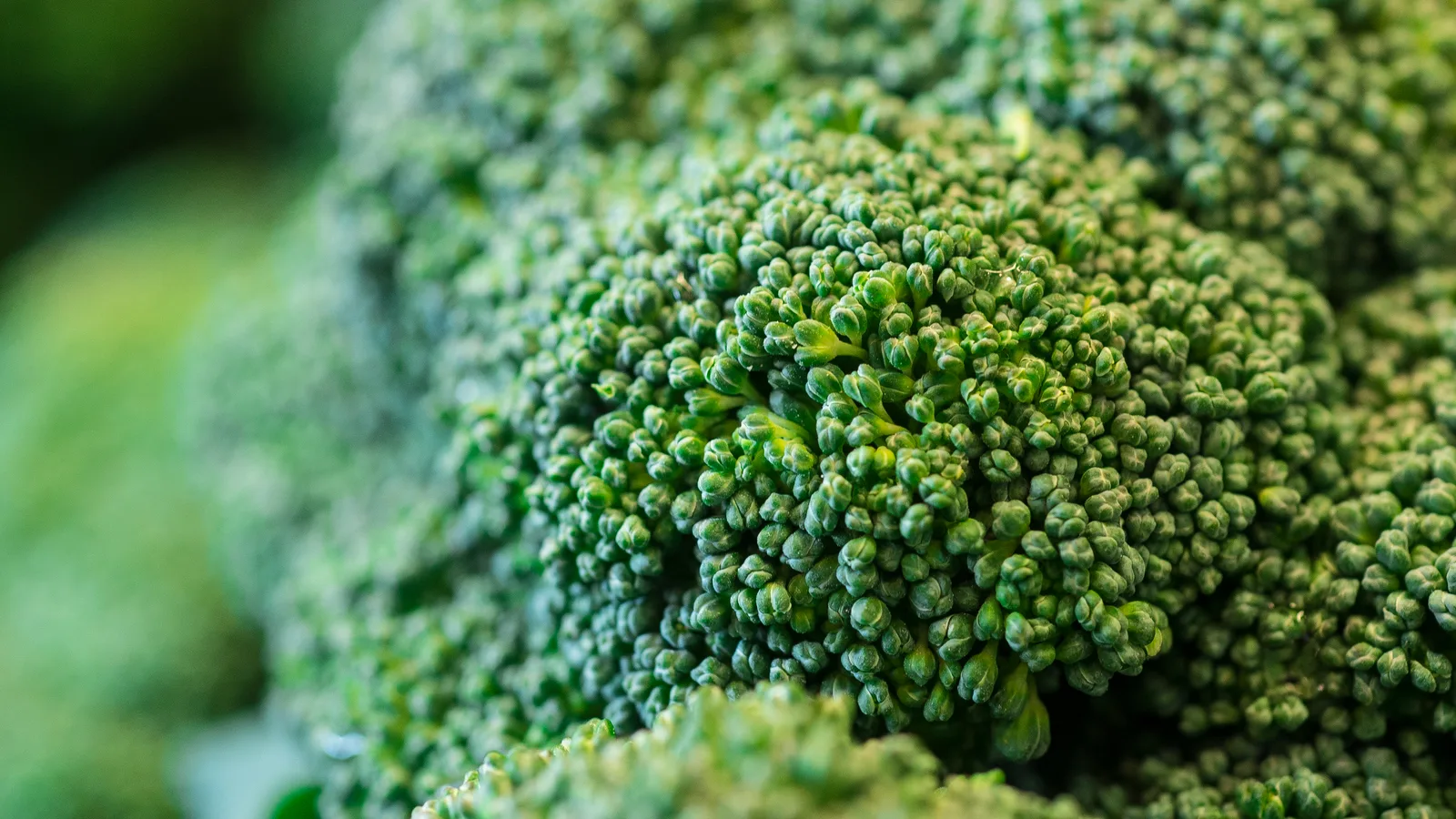
Find the flowers. Each broccoli head is a cluster of tiny flower buds, picked before they open.14 Hand over a magnifying glass, or look up close, and count the buds.
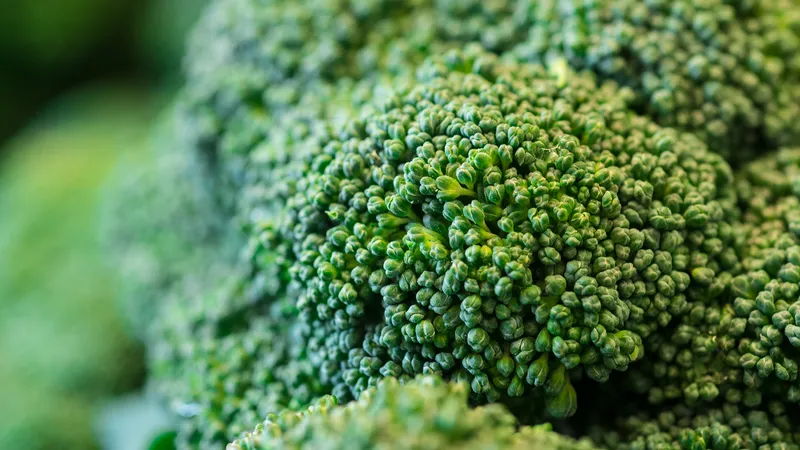
Photo: U.S. Department of Agriculture. Every one of those tiny green bumps is a flower bud.14
-
Run a two-way taste test. Steam half a batch and roast the other half. Your kid tastes one bite of each and picks the winner.
-
Name tonight’s batch. Whoever names it gets to announce it at the table.
-
Shop for it. At the store, let them pick the head with the tightest, darkest green buds. If they like a mission, our TJ’s Grocery Challenge and Taste Test Tracker turns the produce section into one.
Along the way, ask what they notice instead of whether they’ll eat it: “Which one smells stronger, steamed or roasted?” “How many tiny buds can you count on one floret?”
Put on a broccoli song
Music turns cooking time into a show. Here are three NutraBeats broccoli songs to play while it steams or roasts.
Forest on My Fork
Green Giant
Green Kingdom
Broccoli benefits for the whole family
Everything above works for grown-ups too, so the bowl in the middle of the table does the whole family good. That’s one pan of broccoli for everyone, not a kid vegetable and a separate grown-up one. For adults, one cup of cooked broccoli covers a full day of vitamin C (NIH recommends 90 mg for men and 75 mg for women) and more than a day of vitamin K (120 mcg for men, 90 mcg for women), plus about 42% of the folate adults need.3128
- Broccoli has famous relatives. It’s a cruciferous (kroo-SIF-er-us) vegetable, in the same plant family as cabbage, cauliflower, kale and Brussels sprouts. The National Cancer Institute describes this family as rich in nutrients and a good fiber source.22
- That sharp smell has a name. Cruciferous vegetables contain natural sulfur compounds called glucosinolates (gloo-ko-SIN-oh-lates), which give them their pungent smell and slightly bitter taste.22 So if your kid wrinkles their nose at the pot, that’s the sulfur talking.
- Scientists are still studying one of them. When broccoli is cut, chewed and digested, glucosinolates break down into compounds like sulforaphane (sul-FOR-uh-fane). It has been studied for possible anti-cancer effects in labs and animals, and studies in people have shown mixed results, so it’s not a proven benefit.22
- One caution for adults on blood thinners. NIH says anyone taking warfarin (Coumadin) should get about the same amount of vitamin K each day, so if someone in your family takes it, talk with their doctor before big changes in how much broccoli they eat.2
Broccoli questions
Is broccoli a superfood?
“Superfood” has no scientific or regulated definition, according to Harvard’s Nutrition Source, and the word is mostly used to sell food.23 Broccoli doesn’t need the label. It’s rich in vitamin C and vitamin K and gives folate, fiber, vitamin A and potassium too.3 Harvard’s advice is to focus on a “super plate” with lots of different foods, and broccoli fits right in.23
What vitamins does broccoli have?
The biggest are vitamin C and vitamin K: one cup cooked has more than a day’s Daily Value of each. It also has folate (a B vitamin), vitamin A, and minerals like potassium.36
Is it OK to eat broccoli every day?
For most families, yes. Broccoli is a vegetable like any other, and the Dietary Guidelines encourage a wide variety of them.12 Mixing it up with other vegetables brings in nutrients broccoli doesn’t have much of. The one exception NIH flags is for people taking the blood thinner warfarin, who should keep their vitamin K about the same each day and talk to their doctor.2
Is raw or steamed broccoli better?
Raw broccoli has the most vitamin C by weight, and steaming kept vitamin C in a lab test, while boiling lost about a third.1617 A cup of cooked broccoli also holds more broccoli than a cup of raw.316 For young children, cook it soft: pieces of hard raw vegetables are a choking risk.18
Is broccoli good for digestion?
Broccoli has about 5 grams of fiber per cooked cup.3 Fiber is important for digestion, and insoluble fiber adds bulk and appears to help food pass through the stomach and intestines.9
Does broccoli help the immune system?
Broccoli is rich in vitamin C, which NIH says helps the immune system work properly, and it has some vitamin A, which is important for the immune system too.110 Broccoli is one food in a whole diet; no single food prevents colds.
When can babies eat broccoli?
The CDC says the Dietary Guidelines and the American Academy of Pediatrics recommend starting foods other than breast milk or formula at about 6 months, and not before 4 months. For first foods, the CDC says to cook food until it’s soft enough to mash easily with a fork.24 Your pediatrician can tell you when your own baby is ready.
Putting it to work this week
Buy whichever broccoli you’ll really cook, fresh or frozen. Steam it a few minutes or roast it until the edges brown. Give it a name at the table, and let your kid snap the florets off the stalk first.
Thursday night, your kid pulls the “little trees” apart while a broccoli song plays, then asks whether a president really banned broccoli from his plane.
Half a cup does the nutrition. The name and the story do the rest.
Every child is different, so if you have questions about what you or your kids should eat, your pediatrician or a registered dietitian is the best person to ask.
If the president story got a laugh, the NutraPlanet Gazette has the rest of it. Most issues give one food the star treatment, with a comic, music, games and activities. The Broccoli issue tells the president story and includes a recipe your kid can make with you. In our partner districts, younger kids talked about making that recipe at home with their parents. Read a free issue to see what’s inside. If your kid wants more, a Gazette library membership opens all 11 finished issues, broccoli included.
Footnotes
-
NIH Office of Dietary Supplements: Vitamin C ↩ ↩2 ↩3 ↩4 ↩5 ↩6 ↩7 ↩8
-
NIH Office of Dietary Supplements: Vitamin K ↩ ↩2 ↩3 ↩4 ↩5 ↩6 ↩7
-
USDA FoodData Central: Broccoli, cooked, boiled, drained, without salt ↩ ↩2 ↩3 ↩4 ↩5 ↩6 ↩7 ↩8 ↩9 ↩10 ↩11 ↩12 ↩13 ↩14 ↩15 ↩16 ↩17 ↩18 ↩19 ↩20
-
South Carolina DHEC: Take Charge of Your Plate! (serving sizes) ↩ ↩2 ↩3
-
FDA: Daily Value on the Nutrition and Supplement Facts Labels ↩ ↩2 ↩3 ↩4 ↩5 ↩6 ↩7 ↩8 ↩9
-
NIH Office of Dietary Supplements: Vitamin A and Carotenoids ↩ ↩2
-
Dietary Guidelines for Americans, 2025-2030: Daily Servings ↩ ↩2 ↩3
-
Bouzari et al. 2015: Vitamin retention in eight fruits and vegetables ↩
-
Colorado State University Food Systems Institute: Broccoli ↩ ↩2 ↩3
-
Yuan et al. 2009: Effects of different cooking methods on health-promoting compounds of broccoli ↩ ↩2 ↩3 ↩4
-
Turnwald et al. 2017: Indulgent descriptions and vegetable consumption ↩
-
The New York Times: I’m President, So No More Broccoli! (1990) ↩
-
Los Angeles Times: Broccoli Stalks Bush on White House Lawn (1990) ↩
-
National Cancer Institute: Cruciferous Vegetables and Cancer Prevention ↩ ↩2 ↩3